Why Elon Musk Thinks Money Doesn’t Guarantee Happiness
Money has long been tied to the idea of success. Yet the connection between wealth and happiness remains far less clear. When the world’s richest person questions whether money brings joy, the conversation takes on a sharper edge.
On February 5, 2026, Elon Musk posted on X: “Whoever said ‘money can’t buy happiness’ really knew what they were talking about 😔.” The comment quickly drew attention. Musk, the CEO of SpaceX and Tesla, holds the top spot on the Bloomberg Billionaires Index with a net worth of $668 billion. The second-richest person in the world, Larry Page, trails at $285 billion.
His fortune has grown by $49 billion since the start of the year, driven by SpaceX’s soaring valuation and news of its merger with his AI startup, XAI. Despite this surge, Musk suggested that wealth has not delivered contentment.
So, is he right?
The Link Between Income and Happiness

Freepik | Research confirms that higher income consistently correlates with increased daily happiness and life satisfaction.
Research shows that money does improve well-being, at least to a degree. A 2021 study by Matthew Killingsworth, a senior fellow at the Wharton School at the University of Pennsylvania, found that happiness and overall life satisfaction tend to rise as income increases. People earning more reported feeling better on a daily basis.
However, the relationship is not simple. In a 2024 paper, Killingsworth concluded that the income needed to sustain happiness becomes an “exponentially moving goalpost.” As earnings rise, expectations shift. What once felt sufficient may no longer satisfy.
Although his data did not focus specifically on millionaires or billionaires, Killingsworth said it was “plausible” that the same pattern extends to the ultrawealthy.
Diminishing Returns at the Top
David Bartram, an associate professor of sociology at the University of Leicester, offered a grounded view in comments to Business Insider. Wealth and happiness are linked, he explained, but the effect weakens over time.
“It’s very much a matter of ‘diminishing returns,’” Bartram said. “Once you’ve got a few million, anything extra is meaningless for happiness.”
For those at the top of the wealth ladder, financial gains may no longer move the emotional needle. Bartram suggested that lasting satisfaction likely comes from something else. “Happiness is probably best achieved by having a sense that you’ve done some good in the world, and that you’ve treated people around you with care and kindness. It’s not exactly rocket science.”
His point reflects a broader theme in psychological research: security matters, comfort matters, but purpose often matters more.
Musk’s Philosophy on Contribution
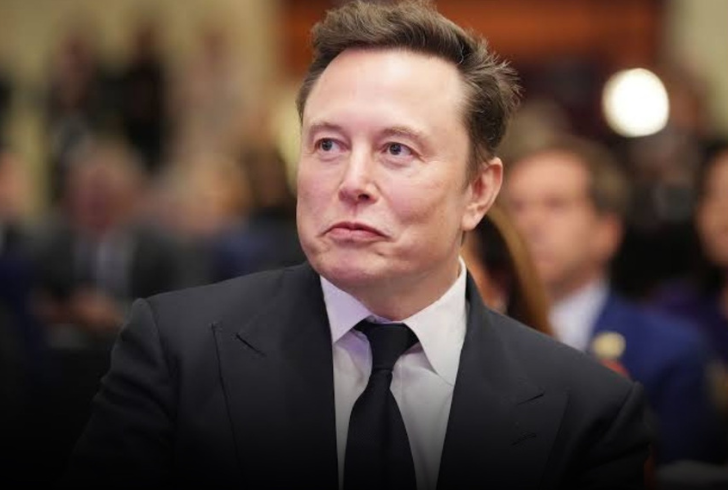
Instagram | instablog9ja | Musk argues that true wealth is a byproduct of prioritizing societal contribution and utility over the direct pursuit of profit.
Musk has addressed this idea directly. In a November conversation with Nikhil Kamath on the podcast “People by WTF,” he discussed the pursuit of wealth and meaning.
“Aim to make more than you take. Be a net contributor to society,” Musk said.
He described financial gain as a side effect rather than the end goal. “It’s kind of like the pursuit of happiness. If you want to create something valuable financially, you don’t pursue that. It’s best to actually pursue providing useful products and services. If you do that, then money will come as a natural consequence, as opposed to pursuing money directly.”
His perspective mirrors findings showing that fulfillment tends to grow from contribution and impact, not from accumulation alone.
What the Data Really Suggests
Data does show a link between earnings and well-being. Higher income can ease anxiety tied to bills, improve living standards, and provide a sense of security. For those climbing out of financial strain, the improvement in happiness can be significant.
But once financial stability becomes unquestioned, the curve bends. Additional wealth at the highest levels yields minimal gains in daily emotional satisfaction. The initial lift associated with income increases fades over time.
That nuance reinforces his point. Financial success can offer comfort and autonomy, yet it does not guarantee inner steadiness. Research consistently highlights purpose and relationships as stronger predictors of sustained happiness than wealth alone.