Inside the Secretive Business of Sourcing Ube, the Viral Purple Food Trend
A vibrant purple drink showing up in a café halfway across the world might seem like a simple food trend. Yet behind that striking color lies a complicated story of sourcing, supply gaps, and rising global demand.
Ube, a purple yam native to the Philippines, has moved from a regional staple to a social media favorite, appearing in lattes, desserts, and packaged goods. As demand rises, the journey from farm to cup reveals a business that is far less accessible than it looks.
A Discovery That Sparked a Business Idea
Jeffrey Cesari grew up familiar with ube through family visits to the Philippines. The ingredient was part of everyday food culture there. Months ago, a chance encounter in a Turkish café changed his perspective. Seeing ube used in a latte made him consider its global appeal.
At 31, the former auditor began exploring the idea of launching a similar product in Paris. The concept felt promising, especially as visually striking drinks continue to attract attention online. Still, turning that idea into reality quickly exposed a challenge—finding authentic ube was not straightforward.
The search began online. Social media groups, AI tools, and supplier listings offered leads, yet trust became a concern. Multiple varieties exist, including Baligonhon, Sampero, and Kinampay. Each has its own flavor profile and quality level. At the same time, ube is sold in different forms such as powder, extract, and jam. That variety increases confusion for new buyers.
Concerns about product purity also surfaced. Some products marketed as ube may include substitutes like taro or purple sweet potato. Without direct sourcing, verifying authenticity becomes difficult.
The Reality of Sourcing
The search paused until a visit to the Philippines earlier this year. During that trip, Cesari explored bake shops and wholesalers to trace supply chains back to farmers. That process proved difficult. Many businesses were hesitant to share supplier details.
“It was a bit frustrating. If we want to get the high-quality ube, I think we have to be on-site, because you have to feel, you have to see, you have to test,” he said. “You have to be careful. Some projects you don’t know if they are very transparent.”
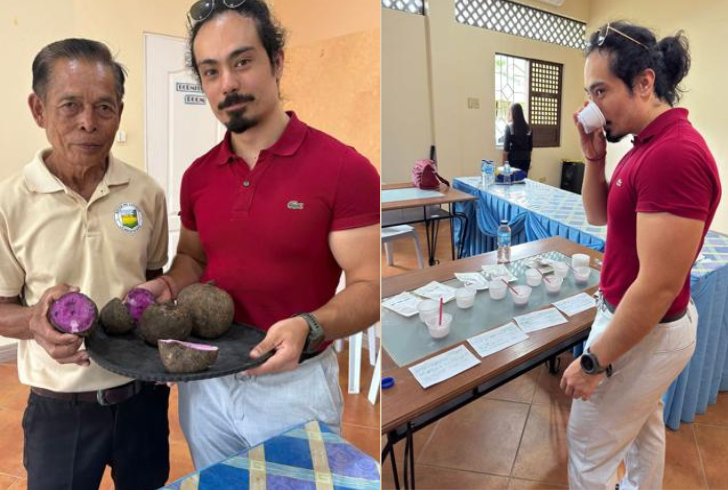
waaytv.com | After seeing ube’s global potential in a Turkish cafe, Jeffrey Cesari is working to bring the Filipino staple to Paris.
Eventually, a lead came through a family connection. A recently launched initiative aimed at expanding ube production pointed him toward farmers on the island of Bohol. A two-hour boat trip from Cebu led to direct conversations with growers willing to supply around 10 kilograms per month.
That connection marked a turning point. With sourcing secured, plans moved forward for launching an ube latte mix under the name “Ube Signature Paris,” with a target release set for late June.
“I can feel the big potential of the ube latte,” Cesari said. “But I have the impression all people are trying to create ube lattes, because they can feel this potential.”
From Niche Ingredient to Global Trend
For years, ube remained largely within Filipino communities. That changed as global food trends shifted toward visually appealing and culturally diverse ingredients. Its rich purple color and mild sweetness made it ideal for drinks and desserts shared across social media platforms.
At the same time, another factor helped accelerate its rise. A shortage of matcha, the popular green tea used in beverages, pushed brands to look for alternatives. Ube emerged as a natural candidate with similar appeal.
Rhea Topacio, founder of an Amsterdam-based company specializing in ube products, observed the shift closely.
“There’s a surge of ube,” she said. “People are always looking for something new. Especially in the times right now, everything is on social media.”
Major coffee chains quickly took notice. In March, Starbucks introduced an iced ube coconut macchiato. The company noted that ube had already gained popularity in select premium locations. Around the same time, Costa Coffee launched ube-flavored options for hot chocolate and frappes.
Consumer awareness is also growing. Research from Datassential shows that 27% of U.S. consumers now recognize ube, compared to 15% five years ago. Despite that increase, ube still appears on less than 2% of menus across the country. That gap suggests room for growth, while also highlighting the limits of current supply.
A Supply Chain Under Pressure
As demand expands, the supply chain struggles to keep up. Unlike widely traded ingredients, ube production remains relatively small-scale and regionally concentrated. That creates a mismatch between global interest and local availability.
Businesses sourcing ube often keep their supply networks private. This lack of transparency makes it harder for new entrants to access reliable sources. It also creates confusion for consumers, who may not be able to tell whether products contain genuine ube.
Topacio has seen an increase in offers from suppliers outside the Philippines, including Malaysia, China, and Vietnam. However, her focus remains on supporting Filipino farmers.
“There’s a missing link between the farmers and the market,” she explained. “They say there is a shortage of ube, but as far as some of my friends know, there is a lot of ube in the marketplace.”
That gap highlights a distribution issue rather than a simple shortage. Farmers often lack direct access to international buyers, while global businesses struggle to find verified sources.
Production Challenges and Farmer Hesitation
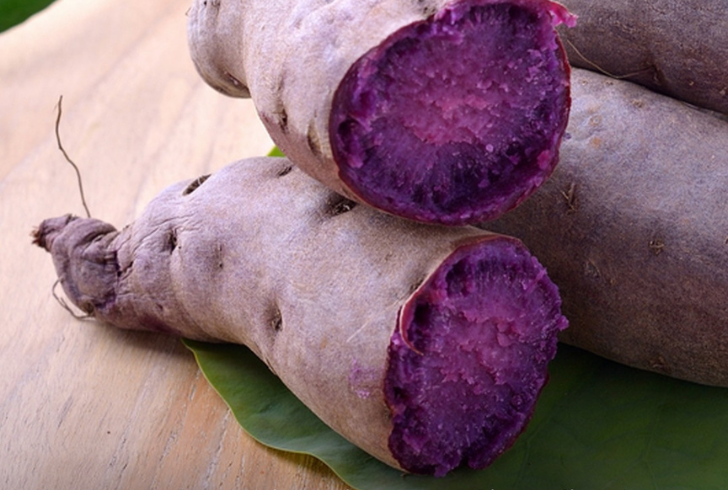
Instagram | slurrpapp | Ube’s long maturation period discourages farmers who prefer the quick financial returns of short-cycle crops.
Efforts to expand ube production are underway. The Philippine government has partnered with universities to increase output, targeting key export markets such as the United States, the United Kingdom, and the Middle East.
Even with those initiatives, growth remains slow. Government data shows that national ube production declined by 6.7% in 2025 compared to the previous year.
One major factor is the crop’s long growing cycle. Ube takes between nine months and one year to mature. In contrast, crops like potatoes can generate income within three months. For farmers, shorter cycles often mean lower risk and quicker returns.
Access to markets is another issue. Farmers in remote areas frequently rely on middlemen to sell their harvests. While this approach offers convenience, it reduces profit margins.
“As of this time, it is the traders who really benefit if there are increases in the price of ube,” said Grace Backian, director of a research center focused on root crops. “Our farmers do not consider it a cash crop.”
A generational shift adds another layer of complexity. Younger individuals are moving away from agriculture, reducing the available workforce. Lower production levels also mean fewer seed tubers for future planting cycles.
To address these issues, research centers are developing improved planting materials and offering training programs. These efforts aim to increase both yield and farmer participation.
New Initiatives to Bridge the Gap
Programs like the Bohol Ube Project are working to connect farmers directly with international buyers. By offering contract-based pricing, the initiative provides more stability for growers.
For farmers, guaranteed buyers reduce uncertainty. For businesses, direct sourcing improves product consistency.
Still, skepticism remains among farmers. Past experiences with unreliable buyers have created hesitation.
“At first, they’re not interested, because they will always say, ‘Oh we’ve been there. We’re frustrated so we don’t want to listen to you,’” said Ellen Grace Zosa-Gallares, a consultant involved in the project.
Promises of market access have not always translated into real opportunities. As a result, building trust takes time.
External Factors Add New Pressure
While supply challenges were already present, global events have introduced new complications. In 2024, Camelle Morta Singh began growing ube in Pangasinan. As her operation expanded, rising costs became a major concern.
The situation intensified due to geopolitical tensions affecting energy supply. A conflict involving Iran disrupted oil and natural gas flows, which are critical for Asia’s energy needs. The Philippines declared a national energy emergency as fuel shortages became more likely.
For farms, the impact is immediate. Irrigation systems depend on fuel, and costs have increased sharply. Singh reported that gas prices for irrigation have tripled.
“Of course we cannot stop production. We cannot let the ube dry out. So even if the price of gas is really high, I have to make sure I buy it. It’s really important for the business,” she said.
As a result, the base price of raw ube rose to 90 pesos per kilogram, marking a nearly 29% increase.
Local Shortages and Rising Prices
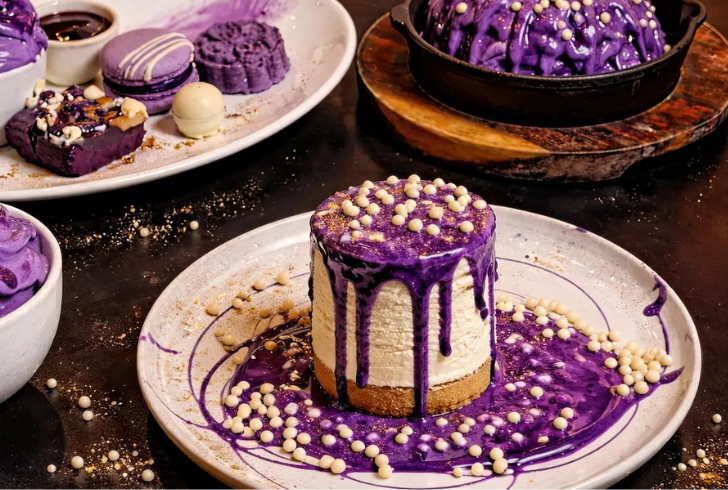
Instagram | sawdah.bhaimiya | Ube’s global popularity is skyrocketing, yet its fragmented supply chain struggles to keep pace.
Supply constraints are now affecting even local markets. Facilities that process ube into products like jam are facing higher demand and limited supply.
At a food processing center that has produced ube halaya since the 1980s, purchasing patterns have changed. Customers who once bought small quantities are now buying in bulk, often clearing out inventory.
“This time demand is really pressing,” said facility manager Johnabel Basatan. “People who are buying just for their home consumption cannot have any more.”
Production capacity remains limited by workforce and equipment. Energy shortages have also led to reduced working days and delays in fuel supply, further restricting output.
Prices reflect these challenges. Raw ube costs have increased by around 38% over the past two years. In some cases, suppliers have only been able to deliver half of their usual orders.
The Road Ahead for Ube
Ube’s rise from a regional ingredient to a global trend highlights both opportunity and imbalance. Demand continues to grow, driven by social media visibility and changing consumer tastes. At the same time, the supply chain remains fragmented and underdeveloped.
For businesses, sourcing authentic ube requires persistence and direct engagement with producers. For farmers, the decision to grow ube depends on financial stability and reliable market access.
The growing popularity of ube reflects how quickly food trends can cross borders. Behind the vibrant color and appealing flavor lies a network shaped by limited production, complex sourcing, and economic pressures.
While demand shows no sign of slowing, the future of ube depends on stronger connections between farmers and global markets. Without that link, the gap between supply and demand will continue to define this expanding industry.