Is Japandi Design Finally Losing Its Hold on Homes in 2026?
Minimalist interiors with Japanese and Scandinavian roots dominated social feeds and show flats throughout 2025. Soft cream shades, clean lines, and calm layouts became the default choice for many homes. Anyone hoping for a dramatic shift in 2026 may need to reset expectations. Industry voices agree that Japandi design is not disappearing anytime soon, though changes are clearly taking shape.
Designers and architects interviewed by The Straits Times confirm that Japandi remains a strong force in Singapore homes heading into 2026. Still, fatigue is growing, and homeowners are quietly pushing for spaces that feel warmer, more personal, and less formula-driven.
Why Japandi Still Holds Its Ground
Japandi’s staying power ties closely to how most Singaporeans live. Mr. Tan Yue Wei, principal architect and founder of YWA Studio, points to the dominance of HDB flats and compact condominiums. Limited square footage naturally favors designs that reduce visual noise and maximize function.
Larger condominiums and landed homes show more variety, yet minimalism continues to anchor most layouts. Even so, resistance is growing.
“I do not want to see another Japandi house” is a comment Mr. Tan says he now hears regularly from both homeowners and designers.
Mr. Lionel Leow, principal architect and co-founder of TA.LE, believes Japandi is shifting rather than fading. The rigid, showroom-style look is giving way to interiors that feel softer and more lived-in, using texture, warmth, and personal objects without clutter.
Searches for Japanese-inspired interiors are still climbing. Google Trends shows “Japandi” growing steadily in Singapore since 2016, while “wabi-sabi” has surged past it. Both borrow from Japanese design, but wabi-sabi embraces imperfection, raw textures, and natural wear. Online, the two often get mixed together, especially on social media and forums.
Design Trends Losing Momentum in 2026
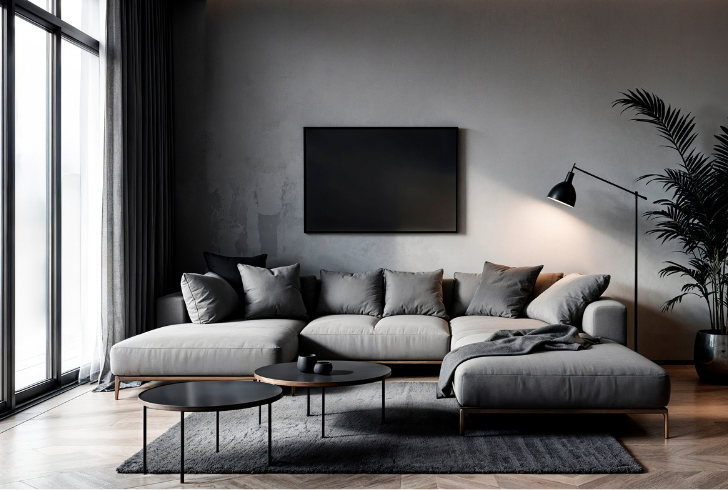
Freepik | Impractical online trends like fluted panels and monochromatic interiors are losing popularity.
Not everything is holding up. Freepik reports that some flashy online trends—fluted panels, monochromatic interiors—are losing steam. Minimalism remains reliable, but popular 2025 features are being reconsidered.
Agnes Yap of Ascend Design says microcement, once a star, is criticized for maintenance and wear. Wilson Teh of Rezt+Relax points to cracking and fading as common complaints. Russell Chin of Inspire ID expects large-format sintered tiles to take over—they last longer and handle daily life better.
Other “Instagram-ready” features aren’t aging well either: bold marble walls, excessive paneling, and all-white or gray interiors often fail in daily life. Chin observes that real-life experiences being shared online are making functionality impossible to ignore.
Leow adds that 2026 shifts focus from purely visual appeal to emotional consistency. Single-tone spaces, purposeless curves, and excessive built-ins are falling out of favor.
Furniture is evolving too. Teh highlights a move away from single-use pieces like dining tables. Homeowners now prefer movable, multi-functional furniture that adapts to work, dining, and everyday life.
Styles Gaining Attention in 2026
Japandi may remain dominant, but alternative aesthetics are gaining ground.
Product designer Nadia Leong from Hipvan predicts the rise of Korean Newtro, a blend of vintage and modern influences. This forecast is based on growing interest seen on Hipvan’s inspiration platform, Communa.
Industrial design is also making a return. Mr. Teh observes renewed interest in cooler tones, repurposed materials, exposed concrete, and open layouts. Unlike its earlier form, the updated industrial style includes greenery and organic textures to soften the look.
Mr. Yap points to increased demand for bold materials and finishes, including bronze and stainless steel. Instead of limewash or microcement, clients are requesting marble and stone slabs with strong veining, stained plywood, and veneer finishes that show natural grain and variation. These materials feel less manufactured and add a stronger visual character.
Japanese influence is also broadening. Mr. Eugene Lee, lecturer of interior design at Lasalle College of the Arts, expects greater appreciation for non-minimalist Japanese styles, especially as more Singaporeans return from trips to Japan. According to YouGov, Japan ranked as the top travel destination among Singapore holidaymakers between October and November 2025.
Across all these styles, one shared goal stands out: relaxation. Designers note that homeowners want spaces that feel different from offices and commercial environments. This means more plants, natural light, and furniture that feels residential rather than corporate. Mr. Chin describes this approach as a way to reduce visual and mental clutter.
Personalization and Design Experiments
Designers anticipate bolder personalization choices in 2026. Mr. Leow points to material honesty as a growing design approach. This philosophy favors using materials as they are, without imitation. Natural stone, timber, and brick with visible texture and imperfection are becoming more desirable.
Longevity plays a central role. Homeowners are increasingly asking how spaces will feel five or ten years from now, not just on move-in day.
Mr. Tan expects wider use of color drenching, where one hue covers walls, ceilings, trims, and sometimes furniture. This approach adds warmth and depth without clutter. In compact homes, it also helps blur edges and make spaces feel more cohesive.
Lighting remains essential. Cove lighting continues to suit low ceilings in HDB flats, but Mr. Teh expects more experimentation with layered lighting, LED track lights, and mixed sources to enhance comfort.
Why Minimalism Continues to Make Sense
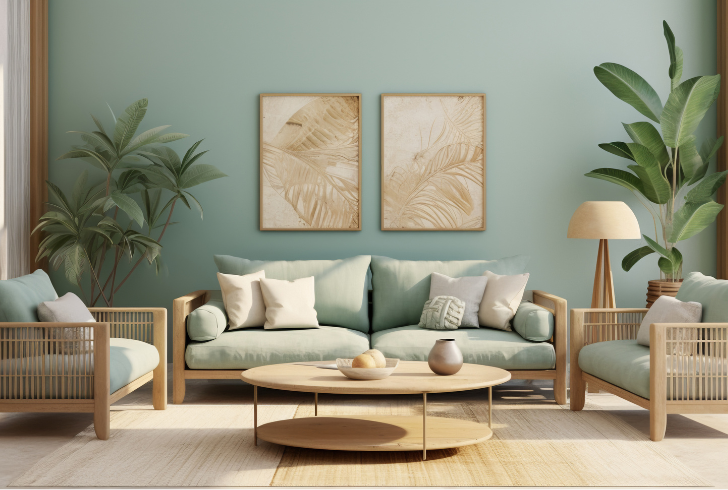
Freepik | Minimalist interiors are evolving toward warmth and practicality rather than disappearing.
Japan-influenced minimalism still holds strong practical appeal. Mr. Lee points out that HDB flat sizes are smaller than in past decades. Data from Teoalida shows that new HDB flat sizes peaked in the 1990s, declined in the 2000s, and have stayed mostly consistent since.
In 2020, the average four-room HDB flat stretched across 90 square meters, home to about 3.13 people. Private housing is navigating similar pressures. Stacked Homes reports that 2025 condo launches show higher prices per square foot, largely because smaller units are keeping overall costs in check.
Minimalist design remains relevant. Japandi, wabi-sabi, Scandinavian, and industrial interiors rely on clean lines, muted colors, and furniture that doubles as storage—functional yet stylish.
Growing Resistance and Creative Tension
Even so, the style is showing cracks. Sharne Sulaiman of Studio Sharne notes growing fatigue on social media and among clients. Interest is swinging toward Postmodern, classical, and handcrafted textures.
Even when clients ask for eclectic interiors, the end result often returns to muted palettes and uncluttered spaces. Sulaiman argues that furniture and décor better convey personality than heavy built-ins.
Experimentation persists but remains cautious. Clients frequently ask for toned-down versions of bold ideas.
Minimalist interiors are adapting. In 2026, warmth, flexibility, and honest materials are reshaping Japandi without abandoning its clean, functional roots.