PGIM CEO David Hunt’s Views on Stocks, Real Estate & Global Markets
Financial markets often react to changes in interest rates, government policies, and global economic trends. For large institutional investors managing trillions of dollars, understanding these shifts requires a long-term view rather than focusing only on short-term market movements.
David Hunt, President and CEO of PGIM, shared his views on global investing, Federal Reserve policy, real estate, and changing trends in the asset management industry during an interview with Business Insider’s deputy executive editor Matt Turner.
PGIM, the investment management business of Prudential, manages more than $1 trillion in assets across global markets. Hunt discussed how investors are balancing opportunities and risks as central banks move away from years of supportive monetary policies.
Focus on Long-Term Investment Performance
Hunt explained that the primary goal of investment managers is to deliver strong results for clients, especially large institutions such as pension funds, sovereign wealth funds, and central banks. These organizations typically invest with long-term goals and seek managers who can generate returns above market benchmarks.
PGIM follows an active investment approach, a strategy that has faced pressure as low-cost passive funds have gained popularity. Passive investing tracks market indexes, while active management aims to identify opportunities that can outperform those benchmarks.
According to Hunt, active management continues to play an important role when investors need specialized knowledge and deeper market analysis.
“Investors are looking for somebody who’s actually going to be able to beat their benchmarks and add excess return for them.”
He believes successful active management depends on finding areas where expertise can create additional value rather than simply following market movements.
Investors Searching for Higher Returns

LinkedIn | Devin Banerjee | David Hunt says asset managers must balance low-cost passive products with specialized active strategies that can create extra value.
One major theme among global investors has been the search for better income opportunities. Low interest rates in several developed markets pushed institutions to explore other areas that could provide stronger returns.
Hunt pointed to investors in regions such as Japan and Europe, where traditional fixed-income investments have often offered limited income. For these investors, opportunities in higher-yielding assets have become more attractive.
PGIM has focused on areas that provide income potential along with long-term growth opportunities. These include real estate debt and equity, infrastructure investments, agricultural assets, and other real assets connected to economic growth.
Real assets have gained attention because they can provide income while also offering potential protection against inflation.
Hunt noted that many investors have expanded their search beyond traditional bonds and equities to find assets that can generate consistent returns over time.
Confidence in the Strength of the U.S. Economy
While global markets face uncertainty, Hunt expressed optimism about the U.S. economy. He noted that economic growth had shown strength and that business investment had become a major factor supporting the market.
Earlier economic growth was largely driven by consumer activity, but Hunt observed a shift in corporate behavior. Companies began increasing investments in their operations instead of focusing mainly on stock buybacks.
This change created opportunities across several market areas, including equities, fixed income, and real estate.
According to Hunt, stronger business investment could support economic growth while creating new opportunities for investors. He also maintained a positive outlook for many areas of commercial real estate, though he identified retail properties as a sector facing more challenges.
Stock Market Performance and Investor Sentiment
Market expectations changed significantly after investors initially reacted to potential economic policies linked with the Trump administration. Early optimism around tax cuts, infrastructure spending, and deregulation created what became known as the “Trump trade.”
However, Hunt explained that this market movement weakened as expectations around those policies declined.
At the same time, the broader economy continued to show improvement. Stronger growth data and better economic performance began influencing investor confidence more than political expectations.
Hunt said market gains were largely connected to improving economic conditions rather than policy speculation.
“The real economy — in a sort of different, parallel universe from politics — was doing even better.”
Later, renewed discussions about tax plans brought some investor enthusiasm back. Still, Hunt suggested that economic fundamentals remained the main driver behind market performance.
Federal Policy Remains a Major Concern
One of the biggest issues facing investors is how the Federal Reserve manages the process of reducing its balance sheet after years of quantitative easing.
Central banks around the world provided significant support to financial markets through low interest rates and asset purchases. As these policies gradually reverse, investors are watching closely for possible market effects.
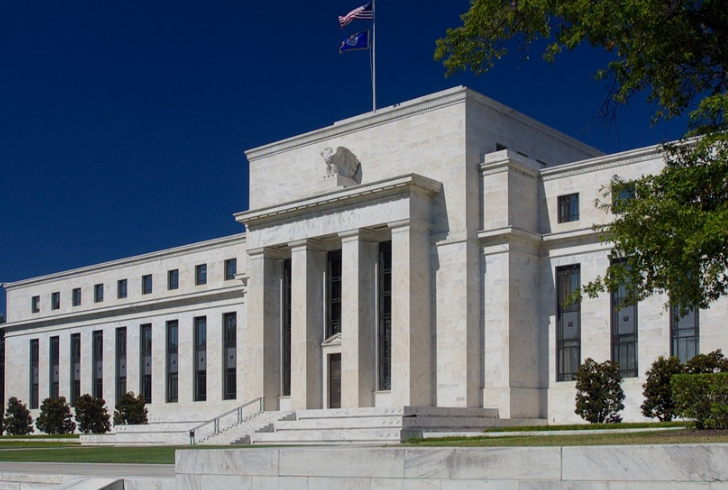
Instagram | federalreserveboard | Central bank balance sheet reductions and rising rates pose a major risk to financial markets.
Hunt described the normalization of monetary policy as a key risk factor. The challenge is not only when interest rates increase, but also how quickly central banks reduce their balance sheets.
“One of the big challenges for the Fed is going to be at what pace they begin to unwind that balance sheet.”
A slower and more predictable adjustment could help markets adapt, while sudden changes could create uncertainty for investors.
Equity Valuations and Market Balance
While Federal Reserve policy remains a major factor influencing markets, David Hunt believes investors should consider a wider range of economic signals. He explained that stock market performance depends on more than just central bank decisions.
At the time of the interview, the S&P 500 was trading at a forward price-to-earnings ratio of around 18.5, compared with its long-term average of about 15.5. This suggested that stock valuations were higher than historical levels.
However, Hunt pointed out that valuations also need to be viewed alongside interest rates. When borrowing costs remain relatively low, higher stock valuations can appear more reasonable because investors have fewer attractive alternatives.
A sudden increase in interest rates could change that balance and put pressure on stock prices. Still, Hunt believed a gradual adjustment remained the most likely scenario.
He said investors should pay attention to how quickly monetary policy changes rather than assuming every rate increase will negatively affect markets.
Opportunities Beyond the U.S. Market
Although the U.S. remained a major focus for investors, Hunt also highlighted opportunities in international markets, especially Japan and emerging economies.
Japan has been an important area of interest because many institutional investors there have been looking outside the country for higher returns. Historically, Japanese investors focused heavily on U.S. investment-grade corporate bonds during their search for income.
Hunt described this as the first phase of the search for yield. A newer phase has expanded into areas such as high-yield bonds, emerging market investments, and structured financial products.
He believes Japanese capital could continue moving into global markets as investors seek stronger income opportunities.
Emerging markets and specialized investment areas may also offer opportunities where active management can provide an advantage.
The Changing Asset Management Industry
The investment management industry is going through a major shift as investors rethink costs, strategies, and portfolio structures.
Hunt explained that institutions are becoming more careful about management fees and are evaluating where active management adds real value.
Many investors now divide their portfolios between low-cost passive investments and specialized active strategies. Passive funds can provide broad market exposure at lower costs, while active strategies may help investors access areas requiring deeper expertise.
The middle section of the market, according to Hunt, faces more pressure. Managers charging higher fees without delivering meaningful differences from benchmark performance may struggle to maintain investor interest.
“Instead of saying, ‘is it active or passive?’, investors will say, ‘how can active and passive work together?’”
This approach allows investors to use passive investments where they make sense while relying on active managers for areas where specialized knowledge can create better outcomes.
Real Estate Investment Trends

Freepik | According to Hunt, today’s real estate investors are prioritizing safety and stability over speculation.
As one of the major players in real estate investing, Hunt also discussed where opportunities exist within the property market.
He explained that investors have become more selective about risk. Demand has increased for stable real estate assets, while interest in highly speculative opportunities has declined.
Several areas continue to attract attention, including logistics properties, multifamily housing, and select commercial real estate opportunities.
Logistics properties have benefited from changes in consumer behavior and supply chain needs. Multifamily housing has remained attractive due to continued demand for rental properties.
Hunt expressed more caution around certain hotel investments, especially in some major cities where valuations appeared stretched.
Overall, he believed real estate continues to offer opportunities when investors focus on strong fundamentals and careful selection.
Bond Markets and Future Interest Rate Trends
Hunt also addressed the relationship between stock markets and bond markets. Earlier market discussions suggested that equities and bonds were sending different signals about economic conditions.
According to Hunt, those markets were not necessarily in conflict. Instead, they had moved toward a balance based on expectations for gradual policy changes. The Federal Reserve mainly controls short-term interest rates, but longer-term rates are influenced by investor demand and broader market conditions.
Hunt noted that strong demand for fixed-income investments could continue supporting longer-term bonds, even as the Fed raises short-term rates.
This could lead to a flatter yield curve, where the difference between short-term and long-term interest rates becomes smaller.
David Hunt’s outlook reflects the balance between risks and opportunities as markets adjust to changing monetary policies. While central bank decisions remain a key factor for investors, economic growth, corporate investment, and specialized strategies continue to create potential areas of growth.
As financial conditions evolve, investors are focusing more on long-term strategies, market fundamentals, and opportunities beyond traditional investments.