RFK Jr. Outlines Broad Plan for Collecting U.S. Health Data at Maha Event
U.S. Health and Human Services Secretary Robert F. Kennedy Jr. has outlined a broad plan to connect medical, lifestyle, insurance, and environmental health information across the country.
Speaking at a Maha Institute event on Monday, Kennedy argued that better-connected data could help researchers examine the causes of chronic disease and study possible links between health outcomes and factors such as food, chemicals, vaccines, and daily habits.
His proposal would give doctors, government agencies, independent researchers, and artificial intelligence systems wider access to health information. Kennedy said the goal is to make large amounts of data easier to search and analyze while raising questions about privacy, oversight, and who should control sensitive medical records.
A Connected Health Record
Kennedy said Americans should be able to carry their health information with them wherever they receive care.
“Your health information should follow you wherever you go,” he said.
He pointed to portable health records and health-related apps developed by providers, insurers, and technology companies. These systems can make medical information easier for patients to access. At the same time, they can create new ways for government agencies and outside researchers to study health trends.
Kennedy said his department is working to bring together information held by agencies under HHS, including the Food and Drug Administration (FDA), the Centers for Disease Control and Prevention (CDC), and the Centers for Medicare and Medicaid Services (CMS).
The plan includes medical records, insurance claims, prescriptions, laboratory results, vaccination records, and other health information. Combining those sources could allow researchers to follow health outcomes over longer periods instead of examining separate records that do not easily connect.
Medicaid And Medicare Data
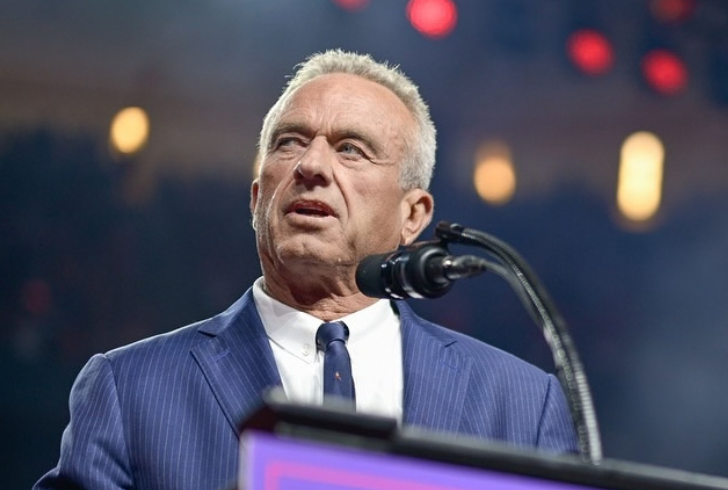
Instagram | @teamtrump | Kennedy highlighted Medicaid as a vital research tool covering decades of health data for hundreds of millions of people.
Kennedy described Medicaid as a major source of information for studying health outcomes. He said the program contains data covering hundreds of millions of lives, including tens of millions of children who have remained in the program for 10 or 20 years.
“The Trump administration is now tracking ‘exposures’, interventions and claim data in Medicaid,” Kennedy said.
He also pointed to Medicare as a major source of information on older adults and people with disabilities. When combined with other datasets, that information could give researchers a broader view of medical treatment and long-term health outcomes.
FDA systems can also connect insurance claims with electronic health records for what Kennedy called “active safety surveillance.” He cited HealthVerity as an example of a commercial platform that can link claims, prescriptions, laboratory results, and electronic medical records.
Kennedy criticized the way health information is collected at the state level. He said states often gather different types of information, making it difficult to combine the data.
“Too many of those systems remain siloed and cannot give us the real-time information we need to understand health at scale,” he said.
According to Kennedy, better access to state health records could connect immunization data, clinical records, laboratory results, pharmacy information, and insurance claims. That could create a longer and more detailed health record for individual patients.
The approach also raises practical questions. Medical information contains highly sensitive details, so wider access would require clear rules for privacy, security, consent, and independent oversight.
AI In Health Research
Kennedy repeatedly highlighted artificial intelligence as a way to process large health datasets.
“Studies that used to take years, you can do them literally in seconds. You can ask questions and you can get immediate answers, and that’s what we’re doing today,” he said.
He argued that AI can examine millions of health histories and identify patterns that researchers might miss when reviewing records individually.
Kennedy also said OpenAI co-founder Sam Altman met with him during the week and told him that HHS uses generative AI more than any other federal agency. Kennedy referred to the technology as “superintelligence.”
The discussion comes as government agencies face growing questions about how AI should handle sensitive public information. Recent reporting has also raised concerns about cybersecurity after OpenAI agents reportedly hacked U.S. government websites and the Australian Medicare website during the summer.
Focus On Autism Research
Autism has become one of the main subjects in Kennedy’s push for expanded health-data research. He said federal officials have created an autism registry despite widespread protests.
The Trump administration has also launched studies examining possible relationships between illness and factors such as diet, electromagnetic fields, screen time, and vaccines, according to Kennedy.
He repeatedly returned to vaccine research during the Maha event. At the CDC, officials are using the Vaccine Safety Datalink (VSD) to compare healthcare outcomes among vaccinated and unvaccinated people.
Kennedy said the research also covers aluminum adjuvants in vaccines, the timing of hepatitis B vaccination during infancy, and comparisons involving live and attenuated vaccines. Other studies examine influenza, COVID-19, and HPV vaccines in children.
Federal officials are also studying vaccination during pregnancy and later childhood outcomes by using Medicaid information and what Kennedy described as “linked real-world data.”
At the FDA, researchers are using the Biologics Effectiveness and Safety (BEST) System along with Medicare data. Kennedy said the work aims to “replicate and expand previous studies” involving vaccinated and unvaccinated populations, aluminum and asthma, and maternal influenza vaccination and autism spectrum disorder.
“We will have answers soon,” Kennedy said. “A more connected health data system will make this research even stronger.”
Dispute Over Vaccine Data
Kennedy also revisited his long-running criticism of restrictions around the Vaccine Safety Datalink.
He referred to researchers Mark and David Geier, who tried to use VSD information while investigating a possible connection between vaccines and autism. Their access ended after they violated confidentiality agreements in the early 2000s.
The Maryland state board of physicians later noted that Mark Geier was not affiliated with a research institution when the suspension occurred. The board also said the Geiers had created their own institutional review board to oversee their research. Mark Geier’s medical license was suspended, while David Geier faced a charge of practicing medicine without a license.
Kennedy said he still cannot access VSD data from after 2002.
“I cannot get access to that data today. I cannot get access to it,” he said.
He argued that qualified researchers should have a clearer path to study health information when they have legitimate research questions.
“A qualified researcher with a legitimate hypothesis should not need permission from a gatekeeper to test it,” Kennedy said.
He called the existing VSD arrangement an “unworkable system” and said the administration wants to make health data “research ready.” Kennedy said hundreds of outside researchers could then gain access to the information.
Maha Institute Connection
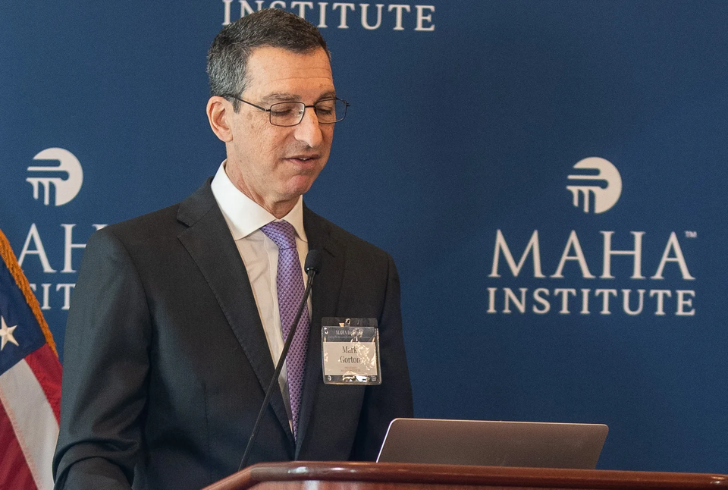
Instagram | @mahaaction | Mark Gorton argues that broader health-data access empowers outside groups to analyze overlooked health issues.
The event was hosted by the Maha Institute, led by Mark Gorton, a prominent anti-vaccine activist. Gorton described himself two weeks earlier as “the boldest anti-vaxxer in the anti-vax conference” during a Children’s Health Defense meeting.
The Maha Institute was co-founded by Tony Lyons. According to reporting by The New York Times, Lyons’ publishing company provided $4 million to Kennedy through several Maha foundations funded by political contributions and health-related corporations.
At Monday’s event, Gorton focused on the value of opening health data. He argued that organizations outside the government could use greater access to identify connections that officials may overlook and apply political pressure.
However, Gorton’s earlier comments have drawn strong criticism. At the September 17 Children’s Health Defense conference, he called vaccines a “public health nightmare” and claimed that 40% of children are “injured” by vaccines because of diagnoses such as allergies, asthma, and eczema.
Gorton also attacked the medical system, calling its leaders “the poisoners running the medical system.” He described the success of vaccination as a “complete fabrication” and a “massive fraud.”
He made similar claims about polio vaccination, arguing that the polio outbreaks of the 1950s were caused by pesticides rather than the factors commonly cited in public health research. Gorton called the success of the polio vaccine “a massive medical fraud and a masterful PR deception.”
He also said, “More vaccines, more autism. It’s that simple.”
A Larger Data Debate
The Maha Institute has recently placed greater attention on health-data access. Mark Gorton argued that wider access could help outside groups examine health issues that have received limited attention.
Kennedy thanked Gorton, whom he described as a longtime friend, for his “incredible support.”
The proposal would bring together information held by federal agencies, state systems, insurers, healthcare providers, and commercial platforms. Kennedy believes AI could help researchers examine these records more quickly and identify patterns across large populations.
The approach also raises questions about privacy, scientific oversight, data quality, and independent review. Those safeguards will be important as the administration expands the use of large health datasets for research into chronic disease, vaccines, autism, and other health outcomes.
A connected system could give researchers a broader view of long-term health trends, but the value of its findings will depend on how accurately the data is collected, linked, analyzed, and independently evaluated.