Small Everyday Choices That Help Reduce Landfill Waste
Most household trash disappears without much thought. A garbage bag leaves the kitchen, gets collected, and quickly fades from attention. Yet the waste itself does not disappear. Plastic wrappers, food scraps, old clothes, and broken items often end up in landfills already struggling to handle rising volumes of waste.
India produces more than 170,000 tonnes of municipal solid waste every single day, according to government estimates. A large share of that waste could be recycled or composted. Still, mixed garbage and weak waste management systems make recovery difficult. As a result, recyclable materials often sit buried under layers of organic waste.
The good news is that cutting down landfill waste does not require a strict zero-waste lifestyle. Small daily choices can lower household waste over time without making life complicated.
Buying Less Creates Less Waste
A large amount of trash begins with overconsumption. Low-cost products often wear out quickly, which leads to frequent replacements and constant disposal. This pattern is especially visible in fashion, where fast-moving trends and online sales have fueled textile waste worldwide.
Choosing durable clothing, home goods, and appliances helps reduce how often items are thrown away. Repairing damaged products instead of replacing them immediately also keeps usable materials out of landfills for longer periods.
A more thoughtful shopping habit often creates less waste than recycling alone. Buying fewer items, especially products designed for short-term use, can noticeably reduce household garbage.
Waste Segregation Has a Bigger Impact
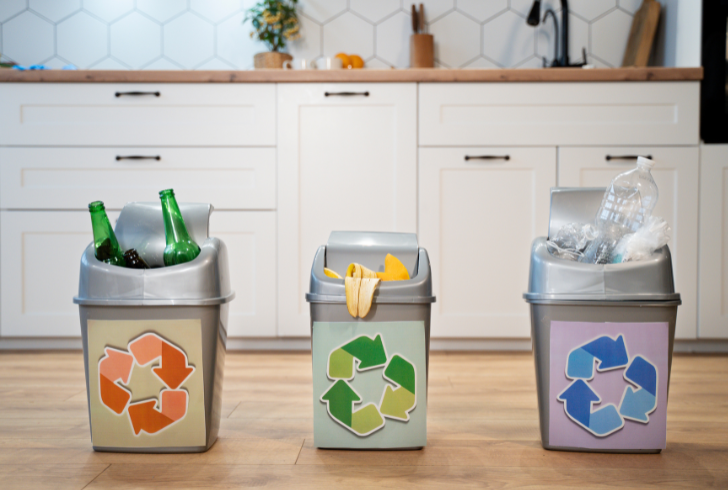
Freepik | Separating your waste at home makes recycling more efficient for sanitation workers.
Many recyclable materials become unusable because they are mixed with food waste. Once paper, plastic, or cardboard gets contaminated, recycling becomes difficult and expensive.
Simple waste segregation at home can change that. Keeping wet waste, dry waste, and recyclables in separate bins allows sanitation workers and recycling systems to process materials more efficiently.
Even small households can improve waste recovery rates with this habit. Segregation also reduces the amount of waste sent directly to landfills, where mixed garbage creates long-term environmental problems.
Composting Is Becoming Easier in Cities
Kitchen waste forms a major portion of household garbage across India. When food waste reaches landfills, it releases methane, a greenhouse gas linked to climate change.
That shift has increased interest in home composting, especially in urban apartments and residential communities. Balcony compost bins, compact kitchen composters, and neighborhood composting setups are becoming more common in cities.
Food scraps, fruit peels, tea leaves, and vegetable waste can be converted into compost for plants and gardens instead of being dumped into overflowing landfill sites. Many households also notice a sharp drop in daily garbage after starting composting routines.
Reusable Over Disposable Products
Single-use products create large amounts of waste despite being used for only a few minutes. Plastic bags, disposable bottles, takeaway cutlery, and paper towels are common examples found in household trash.
Reusable alternatives are slowly becoming part of daily routines. Cloth shopping bags, refillable containers, steel water bottles, and washable kitchen cloths reduce dependence on disposable products.
There has also been renewed interest in stainless steel kitchenware and storage containers, especially among households trying to cut back on plastic packaging. These changes may seem minor individually, but repeated use prevents significant waste over time.
Clothing Choices Also Matter

Freepik | peoplecreations | Reduce textile waste by keeping clothes longer, donating old items, and embracing secondhand shopping.
Textile waste continues to grow across the world. Millions of tonnes of clothing are discarded each year, much of it made from synthetic fabrics that do not break down easily in landfills.
Wearing clothes longer, repairing garments, donating usable items, and shopping secondhand can help slow this cycle. Clothing swaps and thrift shopping have also gained popularity among younger consumers searching for affordable alternatives to fast fashion.
Repeating outfits more often may seem simple, yet it directly reduces demand for short-lived clothing trends that generate unnecessary waste.
Reducing landfill waste rarely comes from dramatic lifestyle changes. In most cases, it develops through consistent everyday habits. The products people buy, the waste they separate, the food scraps they compost, and the items they choose to reuse all shape the amount of garbage sent to landfills.
Small actions repeated daily can gradually reduce pressure on waste systems while encouraging more responsible consumption habits.