Why “Confessions II” Is Madonna’s Best Album in Nearly 20 Years
Madonna steps back into familiar territory with “Confessions II,” a record that reconnects with the dance music identity that shaped one of the most celebrated periods of her career.
Released seven years after the previous studio album, the project serves as a companion to “Confessions on a Dance Floor,” while creating its own musical identity instead of simply repeating the past.
Built around a continuous club mix and packed with emotional reflections, personal memories, and dance-driven production, “Confessions II” stands out as Madonna’s most complete and focused album in nearly two decades.
A Dance Album With a Clear Identity
The opening track, “I Feel So Free,” immediately introduces the album’s central idea. Madonna quietly reflects on reinvention with the lines, “Sometimes I like to just hide in the shadows. Create a new persona. A different identity. I can be whoever I want to be.” The lyrics establish a recurring theme of anonymity, freedom, and self-expression that carries through the entire record.
Before the album’s release, Madonna confirmed that “Confessions II” would return to the dance floor after exploring different musical directions on recent projects. That promise becomes reality across the album’s 16 tracks, most of which were produced by Madonna alongside Stuart Price, the producer behind “Confessions on a Dance Floor.” Their partnership delivers a polished collection that balances club energy with thoughtful songwriting.
Unlike many sequel albums that rely heavily on nostalgia, “Confessions II” captures the spirit of its predecessor while building a fresh musical experience.
Continuous Flow Keeps the Energy Alive
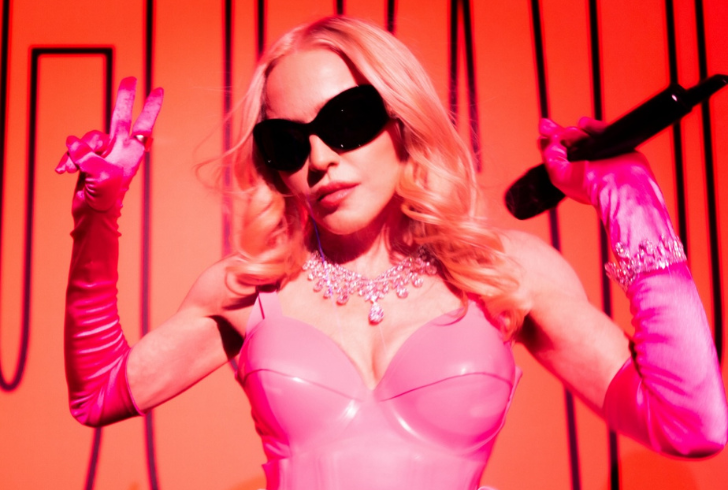
Instagram | @madonna | “Confessions II” beautifully pairs Madonna’s reflective songwriting with Stuart Price’s polished, high-energy dance production.
Just like “Confessions on a Dance Floor,” the new album is arranged as one uninterrupted DJ mix. Each song naturally blends into the next, allowing the project to play like a single extended night inside a nightclub rather than a traditional playlist of separate tracks.
This format strengthens the album’s concept. Darkness, anonymity, and reinvention appear repeatedly throughout the lyrics. Those ideas also appear visually in the music video for “Bring Your Love,” featuring Sabrina Carpenter, where Madonna floats above a crowded dance floor like an ethereal figure watching over the room.
The uninterrupted sequencing gives “Confessions II” a steady rhythm that keeps listeners engaged from beginning to end.
Production Brings Focus Back
One of the album’s greatest strengths is its consistent sound. Earlier releases such as “Rebel Heart” and “Madame X” often shifted between styles, making them feel less unified. “Confessions II” takes a different approach by staying rooted in dance music while exploring multiple electronic genres.
Tracks like “Bring Your Love” borrow from Detroit house influences, while “Everything” moves into darker techno territory. Rather than chasing radio-friendly singles, Stuart Price focuses on gradual builds, layered production, and satisfying payoffs that allow the music to breathe.
Although the album does not attempt to recreate classics like “Hung Up” or “Get Together,” it succeeds by creating its own atmosphere instead of competing with earlier hits.
Among the album’s highlights, “Danceteria” serves as both a nostalgic tribute and one of the record’s most memorable moments. The song revisits New York City’s nightlife during Madonna’s earliest years as an artist.
The lyrics reference handing the demo tape for “Everybody” to legendary DJ Mark Kamins, while recalling encounters with Nile Rodgers, Jean-Michel Basquiat, David Byrne, Crazy Legs, and The B-52s. Madonna delivers the verses through a spoken-word rap style that recalls the iconic narration heard in “Vogue.”
Instead of simply revisiting old memories, the track connects Madonna’s beginnings with the creative freedom that still defines the album.
Strong Hooks Without Repeating the Past
Although “Confessions II” clearly acknowledges its predecessor, it avoids becoming a copy of the 2005 album. While “Confessions on a Dance Floor” combined 1970s disco and 1980s house music with modern pop, the sequel draws from a wider electronic palette without being tied to one specific era.
The lead single “Love Sensation” delivers one of the album’s strongest hooks, while tracks including “Good for the Soul” and “Love Without Words” focus more on atmosphere than traditional pop structures. Their seamless transitions help reinforce the continuous club experience that defines the album.
As the second half progresses, however, the songs begin to sound more similar. Collaborations with Martin Garrix on “Bizarre” and “School” maintain the high-energy tempo, though the consistent pace slightly reduces the impact of individual tracks.
Personal Stories Add Emotional Weight
After spending much of the album celebrating dance culture, Madonna gradually shifts toward deeply personal songwriting.
“Fragile” stands among the record’s most emotional moments. Built around UK garage influences, the song honors Madonna’s late brother, Christopher Ciccone, whose relationship with the singer became strained following his 2008 memoir before they reconciled shortly before his passing. Madonna sings, “Late last night I was fast asleep, you came to me in a dream. You said, ‘Don’t forget about me, don’t forget to be happy.’ So I hope you found a higher ground.”
Another emotionally charged track, “Betrayal,” samples music inspired by Erik Satie while directing sharp lyrics toward Madonna’s stepmother, Joan Ciccone, who died in 2024. The song includes the pointed line, “You couldn’t see your fall from grace, so take the hammer, hit the nail. You’ll never take my mother’s place.”
These songs create a noticeable shift from the carefree atmosphere that dominates much of the album.
A Meaningful Family Collaboration

Instagram | enews | Co-written by her daughter Lola Leon, Madonna’s touching duet “The Test” is an album highlight.
One of the album’s most touching performances arrives with “The Test,” a duet between Madonna and her daughter Lourdes “Lola” Leon, who also co-wrote the song.
Madonna reflects on the challenges that fame may have created for her family while referencing “Little Star,” the lullaby dedicated to Lourdes on “Ray of Light.” She sings, “I tried to put you on a pedestal. I didn’t think of how it could disturb or how it hurt. I wish I knew the pain I’ve caused.”
Lourdes responds with her own perspective, singing, “I trace the line of what you have sewn. Keep my own design. Make it a landscape, make it alive.” The exchange creates one of the album’s most sincere and emotionally balanced moments.
“L.E.S.” Ends the Album on a Reflective Note
The closing track, “L.E.S.”, slows the pace and replaces club beats with sparse guitar arrangements. Madonna looks back on life in New York City’s Lower East Side before worldwide fame, remembering overdue rent and a romance with someone described as having a “Marlon Brando face” and bleach-blonde roots.
The quieter ending contrasts with the dance-heavy first half while bringing the album full circle. Instead of relying on spectacle, Madonna closes the project by reflecting on the experiences that shaped both the artist and the person behind the music.
“Confessions II” succeeds because it balances energetic dance production with thoughtful storytelling. The album revisits the style that made “Confessions on a Dance Floor” a landmark release without becoming a direct imitation.
Consistent production from Madonna and Stuart Price, memorable tracks like “Danceteria,” “Love Sensation,” “Fragile,” and “The Test,” along with honest personal reflections, give the record both musical momentum and emotional depth.
While the second half occasionally loses variety, “Confessions II” remains Madonna’s most cohesive, engaging, and rewarding studio album in many years.